
MATCH THE FILLING METHOD
TO THE PRODUCT.
TM Engineering helps develop filling solutions for liquid and powder products, with the machine arrangement selected around the material, container and required fill quantity.
The aim is a practical filling process that supports consistent production and suits the way your operators work.
DISCUSS YOUR FILLING APPLICATION →
ONE FILLER DOESN'T
SUIT EVERY PRODUCT.
Free-flowing liquids, thick products and powders behave differently during filling. Liquids may foam, drip or contain particles, while powders can bridge, compact or create dust.
The filling method must account for these characteristics rather than assuming one machine can handle every product.
VISCOSITY
Liquid filling arrangements are assessed against the viscosity and flow characteristics of the product.
FOAMING
Product behaviour during filling can influence nozzle arrangement, dispensing method and operating speed.
PARTICLES
Products containing particles need to be considered when selecting the filling method and product-contact components.
BRIDGING
Powder flow characteristics can influence hopper, dosing and product handling requirements.
COMPACTION
Powder density and compaction behaviour need to be considered when establishing the dosing arrangement.
DUST
Powder filling applications may also need to account for dust, cleaning access and operator handling.
ENGINEER THE FILL
AROUND THE APPLICATION.
The product, target fill quantity, container and required production process help determine which filling method should be assessed.
LIQUID
FILLING
Liquid filling arrangements assessed against viscosity, foaming and particle content.
PISTON &
PUMP FILLING
Piston or pump-based filling approaches where suitable for the specified product.
AUGER
SYSTEMS
Auger-based powder dosing can be considered subject to the product characteristics and application.
WEIGH-BASED
FILLING
Weigh-based powder dosing options can be assessed where appropriate for the material and process.
SINGLE / MULTIPLE
FILL POSITIONS
Single or multiple filling positions can be configured around the required production process.
CONVEYORS &
CAPPERS
Container handling, nozzle arrangements and integration with conveyors or capping equipment.
THE MACHINE HAS TO WORK
AROUND THE PRODUCT.
Fill quantity, acceptable variation, container opening and target output help define the machine.
Product-contact materials, cleaning access and changeover requirements must also be agreed for the application. Pneumatic or electrically controlled functions can be incorporated as required.
Product trials help establish achievable performance. Filling accuracy and throughput are confirmed for the specified product and configuration.
SEE THE FILLING PROCESS
IN ACTION.
Selected liquid and powder filling applications from TM Engineering. Choose an application to view the machinery in operation.
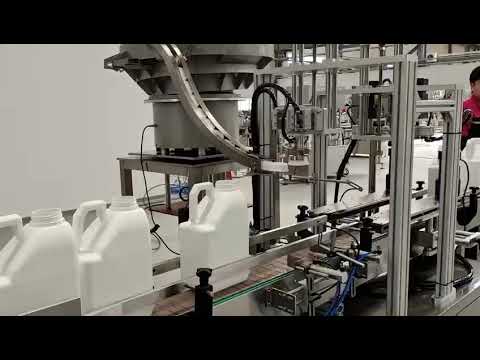
LIQUID FILLING
START WITH
THE PRODUCT.
Tell us what you are filling, the target quantity and tolerance, container dimensions and required containers per minute.
Include product viscosity or powder characteristics where known, plus cleaning requirements and available utilities.
