
GIVE YOUR CONTROL SYSTEM
A CLEARER VIEW OF THE PROCESS.
TM Engineering assists with industrial sensors for machine automation, product detection and process monitoring.
From detecting a bottle on a conveyor to monitoring pressure in a system, the right sensor provides the information your controls need to respond consistently.
FIND THE RIGHT SENSOR → MACHINE FEEDBACK


INDUSTRIAL SENSING
FROM ESTABLISHED BRANDS.
Sensor selection depends on the target, environment, control system and electrical requirements of the application.






THE SENSOR HAS TO SUIT
WHAT IT NEEDS TO SEE.
A sensor must suit the target, mounting position and operating environment. Product colour, transparency, material, distance and background conditions can all influence detection.
Choosing a sensor around the actual application helps reduce missed signals and unnecessary machine interruptions.
MATERIAL
The material being detected influences which sensing principle is appropriate.
COLOUR
Colour and surface characteristics can influence optical detection.
TRANSPARENCY
Transparent containers and materials may require a sensor selected specifically around the target.
DISTANCE
Sensing distance needs to match the physical installation and available mounting position.
BACKGROUND
Background conditions can affect reliable detection in conveyor and machine applications.
CONDITIONS
Dust, moisture, mounting conditions and washdown exposure also need consideration.
SENSORS FOR
INDUSTRIAL CONTROL.
Select the sensing principle around what needs to be detected, measured or monitored in the machine or process.
INDUCTIVE
PROXIMITY SENSORS
Inductive proximity sensors for metal detection and position feedback.
PHOTOELECTRIC
SENSORS
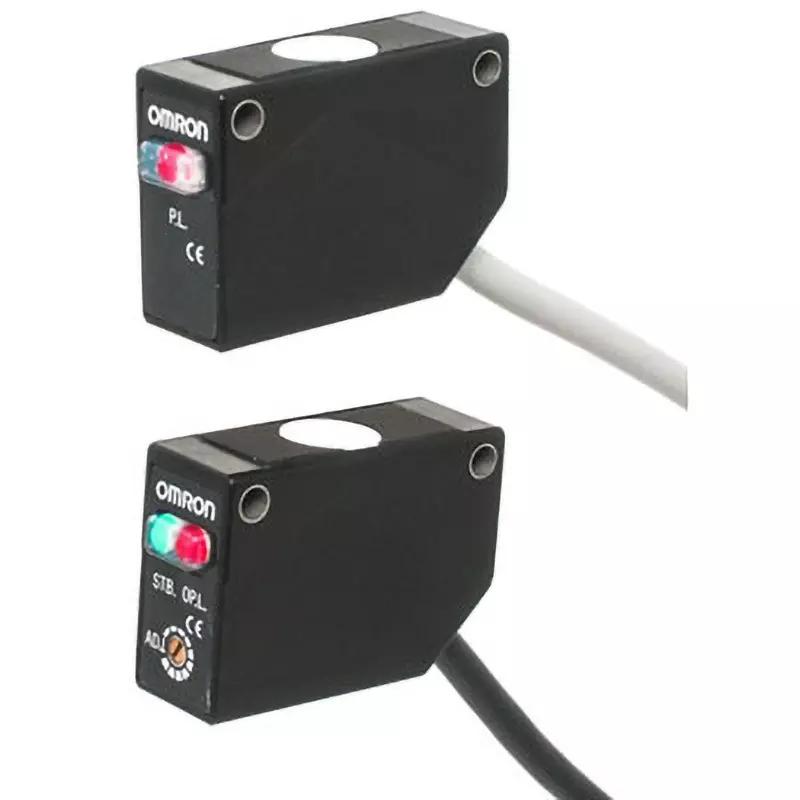
Photoelectric sensors for products, packages and conveyor applications.
CAPACITIVE
SENSORS
Capacitive sensors for suitable material and level detection tasks.
TEMPERATURE
SENSORS
Temperature sensors for monitoring heating and cooling processes.
PRESSURE SENSORS
& SWITCHES
Pressure sensors and switches for pneumatic and process systems.

SENSOR SIGNALS
TO MACHINE CONTROL
Sensor signals can support sequencing, counting, alarms and process monitoring.
THE SIGNAL HAS TO MATCH
THE CONTROL SYSTEM.
TM Engineering can help assess sensing distance, response time, supply voltage and the required output signal.
PNP, NPN and analogue outputs must be matched to the receiving equipment. Sensor mounting, cable connections, dust, moisture and washdown exposure also need consideration.
Integration with machine controls allows the signal to support sequencing, counting, alarms or process monitoring.
DETECT IT.
THEN USE THE SIGNAL.
Once the sensor has reliably detected or measured the required condition, the signal can become part of the machine sequence.
SHOW US WHAT
NEEDS TO BE DETECTED.
Share a photograph of the sensing position and describe what must be detected.
Include the target material, distance, operating speed and existing sensor number where available.
